pet-friendly-flooring-options
Choose 20 mil LVP or Sealed Tile: Pet Friendly Flooring by Room
Waterproof luxury vinyl plank and textured porcelain tile are the two strongest pet-friendly flooring options for most homes, with the choice between them coming down to comfort versus outright durability. LVP wins on warmth and traction for aging joints, while tile wins on scratch-proof, stain-proof toughness. Engineered hardwood, laminate, pet-grade carpet, and rubber or cork fill in the gaps depending on the room and how rough your pets are on a floor.
TL;DR:
Waterproof vinyl plank with a wear layer of at least 12 to 20 mils offers the best scratch and moisture resistance for active, larger dogs.
Sealed porcelain tile is extremely durable and stain-proof but can be slippery for senior pets, necessitating textured finishes and rugs.
Engineered hardwood suits calmer pets in low-traffic areas but is limited in refinishing and vulnerable to scratches from active pets.
Laminate flooring is suitable for low-traffic rooms if installed with sealed seams and an AC4 or higher abrasion resistance rating, but it is vulnerable to moisture at the seams.
Professional installation is crucial to avoid subfloor issues, ensure proper transitions, and secure warranty coverage, especially for high-traffic and water-prone areas.
SolutionteamremodelingPlan A More Functional HomeSolution Team Remodeling helps Redmond homeowners address outdated designs and inefficient layouts through thoughtful planning and skilled craftsmanship.Explore remodeling services
Table of Contents
What Are the Best Pet-Friendly Flooring Options?
Why Luxury Vinyl Plank Handles Pets So Well
Is Porcelain Tile Good for Dogs and Cats?
How Does Engineered Hardwood Hold Up With Pets?
Does Laminate Flooring Work for Pet Owners?
Can Carpet Ever Be Pet-Friendly?
Where Do Cork and Rubber Flooring Fit In?
Choosing the Right Pet-Friendly Floor: A Decision Checklist
Daily and Long-Term Care for Pet-Friendly Floors
How Installation and Warranty Terms Affect Long-Term Results
Why a Professional Installer Matters for Pet-Proof Floors
The Real Tradeoff Nobody Talks About in Pet Flooring Guides
Get Pet-Friendly Flooring Installed the Right Way
Sources
FAQ
What Are the Best Pet-Friendly Flooring Options?
Picking the right material starts with matching it to the room, not just the pet. A mudroom needs different toughness than a bedroom, and a household with two large dogs has different priorities than one with an elderly cat.
Waterproof LVP — best for whole-home use, especially kitchens, living rooms, and hallways; tradeoff is that cheaper lines still scratch under heavy claws.
Porcelain or ceramic tile — best for entryways, mudrooms, and bathrooms where urine and mud are constant; tradeoff is a hard, cold surface that’s tougher on aging joints.
Engineered hardwood — best for lower-traffic living and dining rooms with calmer or smaller pets; tradeoff is limited refinishing life once scratches build up.
Laminate — best for budget-conscious bedrooms and offices with lighter pet traffic; tradeoff is vulnerability to standing moisture at the seams.
Pet-grade carpet — best for bedrooms and playrooms where softness matters more than stain resistance; tradeoff is more frequent deep cleaning.
Cork or rubber — best for kennels, basements, and recovery spaces; tradeoff is a look that reads more “utility room” than “living room.”
Three signals tend to push the decision one way or another. First, accident frequency: a puppy in training or a senior dog with incontinence issues points hard toward waterproof LVP or sealed tile, not carpet. Second, claw length and activity level: large, energetic dogs that can’t keep nails trimmed need thicker wear layers and better traction, not glossy hardwood. Third, the room’s exposure to water and mud, since an entryway has completely different demands than a guest bedroom.
Why Luxury Vinyl Plank Handles Pets So Well
Waterproof LVP tends to outperform almost everything else for whole-house pet living, and the reason comes down to two engineering details most shoppers never check: core type and wear-layer thickness. Industry guides consistently recommend waterproof vinyl and rigid-core products for pet households because they balance scratch resistance, full waterproofing, and warmth underfoot in a way tile and hardwood can’t match simultaneously.
Not all vinyl is equal. Waterproof rigid-core LVP, built on an SPC (stone-plastic composite) or WPC (wood-plastic composite) core, survives standing liquid indefinitely. “Water-resistant” vinyl only tolerates brief exposure before moisture reaches the subfloor, which matters a lot with a dog that isn’t fully house-trained yet.
Wear-layer thickness, measured in mils, determines how long the surface resists claw drag before it dulls or scratches through:
6 mil — entry-level, fine for a cat-only home, too thin for an active dog
12 to 20 mil — the sweet spot for most dog households, with 20 mil recommended when dogs are large or high-energy
28 mil and above — commercial-grade, worth it for multi-dog households or rental properties
Look for embossed-in-register (EIR) or micro-etched textures rather than glossy finishes. That texture gives paws real grip and hides light scratches better than a smooth surface ever will. For installation, click-lock floating floors work fine in most rooms, though glue-down or full-spread adhesive installation reduces plank movement in high-traffic hallways or homes with very large, active dogs.
Pro Tip: After an accident on LVP, blot first, then clean with a pH-neutral or enzyme cleaner rather than ammonia. Ammonia mimics the smell of urine and can actually encourage repeat marking in the same spot.
Is Porcelain Tile Good for Dogs and Cats?
Porcelain and ceramic tile are about as close to indestructible as residential flooring gets. Claws don’t scratch it, and sealed tile surfaces resist urine and stain penetration better than almost any other material on this list, which is exactly why it dominates mudrooms and dog-washing stations.
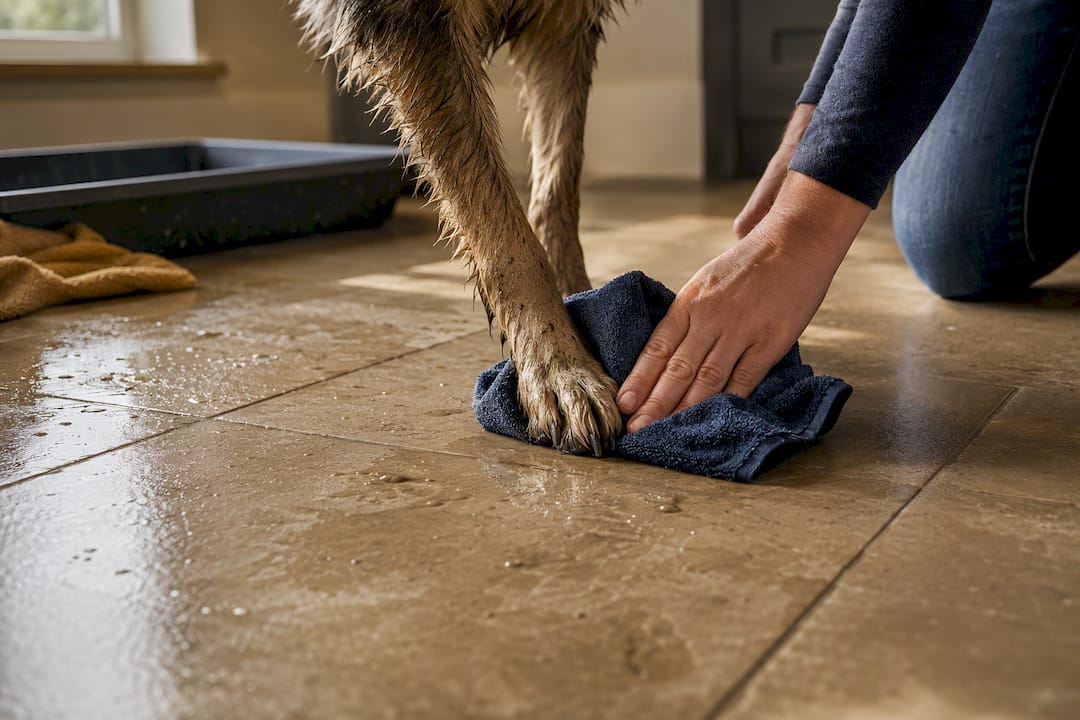
The catch is grout. Unsealed grout is porous, and porous surfaces trap odor-causing bacteria over time. Sealing grout at installation and resealing it every year or two keeps the surface as close to impermeable as the tile itself.
Traction is the real tradeoff. Glazed tile can turn dangerously slick for a senior dog with hip issues, so ask for a textured matte finish and check the slip-resistance rating before committing. A few practical fixes soften tile’s downsides without giving up its durability:
Add rubber-backed area rugs in high-traffic zones to cut slipping and cushion joints.
Consider radiant floor heating under tile in rooms where older pets spend a lot of time, since cold tile can stiffen arthritic joints.
Clean grout lines with a pet-safe, non-ammonia cleaner to avoid residue that irritates paw pads.
How Does Engineered Hardwood Hold Up With Pets?
Engineered hardwood gives you the warmth and resale appeal of real wood with more dimensional stability than solid hardwood, but it still has a hard ceiling with pets. The veneer layer on top, often just 2 to 6 millimeters, can only be sanded and refinished so many times before you’re through to the substrate. Two or three large, active dogs will chew through that veneer’s finish faster than most homeowners expect.
A hard-wax or aluminum-oxide finish resists scratches and moisture noticeably better than a standard polyurethane coat. If you’re set on wood in a home with multiple large dogs or a pet with frequent accidents, talk to an installer about whether a different room or material makes more sense before you invest in it.
For calmer households, cats, or a single small-to-medium dog, engineered hardwood works well in living and dining rooms with a few habits in place: area rugs at entry points, quick cleanup after any accident, and nail trims on a regular schedule to limit surface scratching.
Does Laminate Flooring Work for Pet Owners?
Laminate has genuinely improved, and modern AC4 or AC5-rated laminate resists scratches about as well as mid-range LVP. The AC rating measures abrasion resistance, and anything below AC4 wears down fast under dog traffic.
Moisture is where laminate falls behind. Even laminate marketed as “water-resistant” isn’t waterproof, and standing liquid at the seams can cause the core to swell, warping boards permanently. That’s a real risk with puppies, senior pets, or any household where accidents happen more than occasionally.
If your pets are reliably house-trained and accidents are rare, laminate installed with tight, well-sealed seams is a solid budget option for bedrooms and home offices. If accidents are a regular reality, spend the extra money on waterproof LVP instead. The core difference between the two materials isn’t scratch resistance, it’s what happens the moment liquid sits on the seam overnight.
Can Carpet Ever Be Pet-Friendly?
Carpet still has a place in a pet home, just not the traditional kind. Solution-dyed fibers like PET (polyester) carry color all the way through the strand instead of on the surface, so stains have nothing to cling to. Lines like Shaw’s Pet Perfect collections pair that fiber technology with molecularly bonded stain protection and waterproof backing, cutting cleanup time significantly compared with standard carpet.
For indoor air quality, look for Green Label Plus certification on both the carpet and the adhesive, which limits VOC emissions, a real consideration for pets that spend most of their day with their nose at floor level.
Even the best pet carpet needs weekly vacuuming to control shedding and odor, and claws will still snag a loose loop pile over time. If you want carpet in a pet home, stick to tight, low-loop or cut-pile constructions built for stain resistance.
Where Do Cork and Rubber Flooring Fit In?
Cork and rubber are the specialists of this list. Neither is a whole-house choice, but both excel in the rooms where LVP and tile feel too slick or too hard.
Rubber flooring gives dogs the best traction of any material discussed here, plus enough cushioning to protect joints during play, making it a favorite for kennels, playrooms, and basements. Cork brings similar softness with a warmer, more natural look, along with some natural resistance to odor and mild antimicrobial properties.
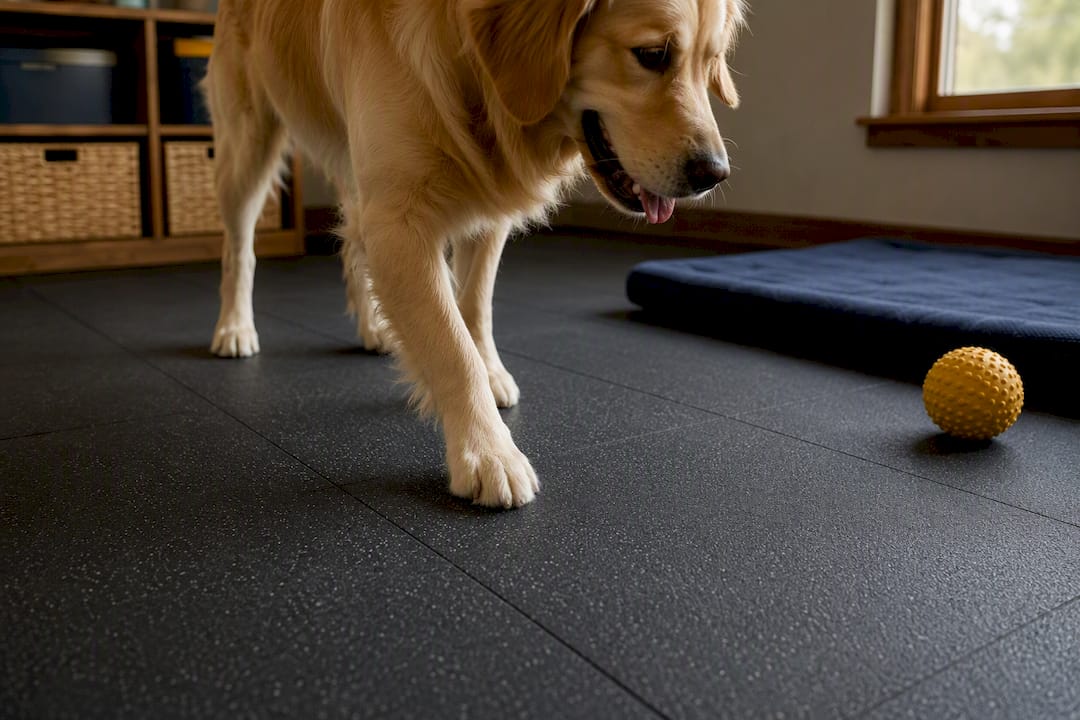
The tradeoff is aesthetics and, in cork’s case, sensitivity to sharp claws over time. These materials aren’t built for a formal living room, but for a garage turned dog gym or a recovery space after surgery, they outperform almost anything else on comfort and grip.
Choosing the Right Pet-Friendly Floor: A Decision Checklist
Match your pet’s size, age, and behavior to a flooring category before you fall in love with a look.
Small, calm pets (cats, small dogs): engineered hardwood or laminate work fine with basic precautions.
Medium to large, active dogs: waterproof LVP with a 20 mil or higher wear layer is the safer bet.
Multiple large dogs or frequent accidents: porcelain tile or heavy-duty rigid-core LVP, paired with sealed grout where applicable.
Senior pets with joint issues: prioritize textured, warmer surfaces like LVP over glossy tile or hardwood.
Puppies still house-training: anything fully waterproof, never carpet, until habits are established.
Before you sign a contract, confirm four specs in writing: the waterproof rating (not just “water-resistant”), the wear-layer mil count, the AC rating for laminate, and whether the warranty language actually covers pet-related wear or excludes it outright.
Pro Tip: Ask any installer directly whether their warranty excludes “pet damage.” Some manufacturer warranties void coverage the moment a claim involves a pet, regardless of the actual cause of the failure.
Daily and Long-Term Care for Pet-Friendly Floors
The immediate accident routine matters more than the flooring material itself for preventing long-term damage. Blot liquid immediately, clean with an enzyme-based cleaner rather than ammonia, dry the area fully, and ventilate the room. On tile, check the grout line afterward; on LVP, check the seams; on laminate, act fast since moisture sitting even 20 minutes can start swelling the core.
For daily upkeep:
Sweep or vacuum hair daily on hard surfaces to prevent buildup in seams and grout lines.
Use a rubber-bristle vacuum attachment on carpet weekly to lift embedded hair.
Damp-mop LVP and tile with a pH-neutral cleaner rather than harsh degreasers.
Extension research on kenneled dogs found that porous, poorly maintained flooring can contribute to foot health problems, reinforcing why non-porous, easy-to-clean surfaces matter beyond just appearance. Plan on resealing tile grout every year or two, touching up hardwood finish as scratches appear, and scheduling a professional deep clean for carpet at least once or twice a year.
How Installation and Warranty Terms Affect Long-Term Results
How a floor gets installed changes how it performs under a dog’s daily wear. Glue-down or full-spread adhesive installations resist plank shifting and seam separation better than floating floors in high-traffic paths, which matters most with heavier, more active dogs.
Before signing anything, read the warranty for three things: whether wear-and-tear exclusions specifically mention pets, how water damage is defined and limited, and what voids coverage entirely. A tile disposal and removal plan is also worth discussing upfront if you’re replacing old flooring, since old tile and adhesive aren’t always simple to haul away.
Realistically, waterproof LVP tends to last 15 to 25 years in a pet home, porcelain tile can outlast the house itself if the grout is maintained, and carpet in an active pet household usually needs replacing within 7 to 10 years even with pet-focused fibers.
Why a Professional Installer Matters for Pet-Proof Floors
Subfloor problems don’t show up until the new floor is already down, and that’s usually the moment a DIY project turns expensive. Uneven subfloors, moisture trapped underneath old flooring, or transitions between rooms with different heights are all things a professional catches before installation, not after.
A remodeling team works with homeowners to match material choice to the household’s actual pets rather than just the room’s square footage. Complex transitions between flooring types, warranty-required installation methods, and full floor removal before a new install are all cases where hiring a pro protects both the investment and the warranty. A solid estimate should walk through material options, installation method, and timeline before any contract gets signed.
The Real Tradeoff Nobody Talks About in Pet Flooring Guides
Most flooring guides treat “pet-friendly” as one property, when it’s actually three competing ones: traction, moisture control, and surface hardness. A floor can win on two and still fail a specific household because of the third. Glossy porcelain wins on moisture and hardness but can be a hazard for a senior dog’s hips. Plush carpet wins on comfort but loses badly on moisture control with an untrained puppy.
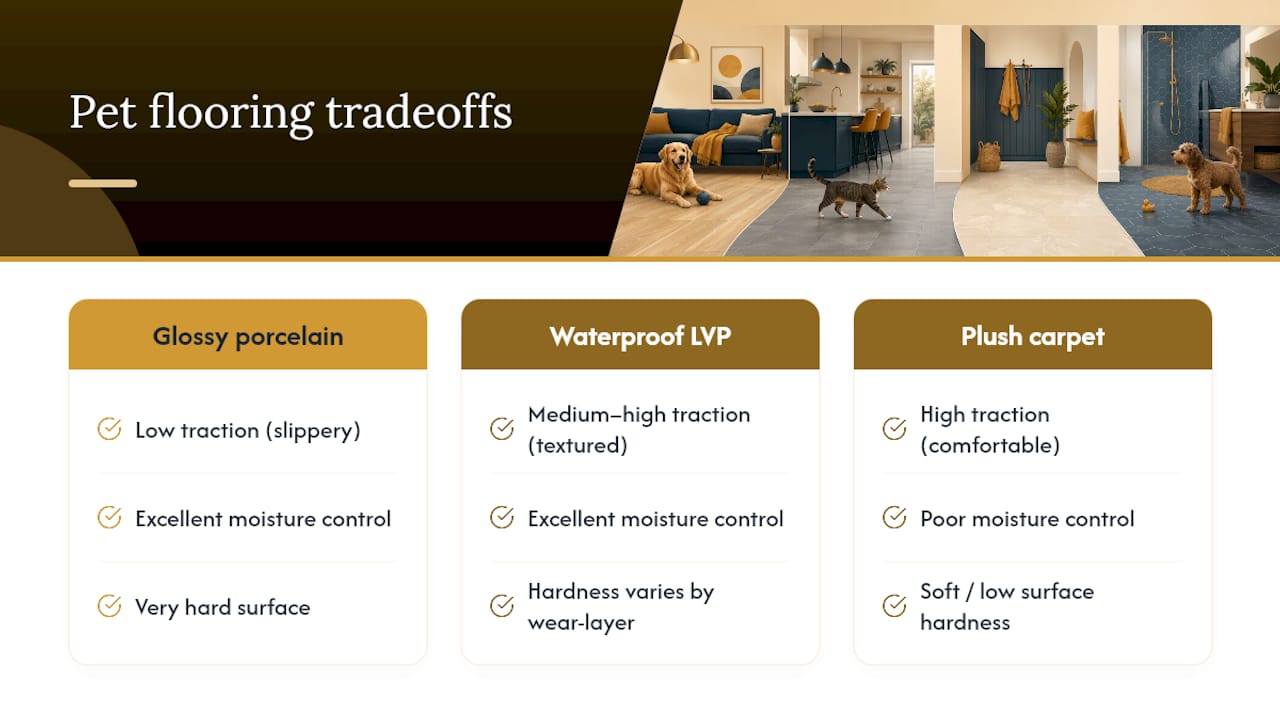
The conventional advice to “just get vinyl, it’s pet-friendly” skips the part that actually matters: which vinyl, at what wear-layer thickness, with what surface texture. A 6 mil budget plank and a 20 mil rigid-core plank get marketed under the same “pet-friendly” label, and only one of them survives a 70-pound dog for a decade.
If you take one thing from this, prioritize the wear-layer mil and the texture finish before you even look at color or plank width. Those two specs decide whether your floor looks the same in five years or needs replacing in two. Room by room, pet by pet, that’s the detail that actually separates a good outcome from an expensive redo.
— Vlad
Get Pet-Friendly Flooring Installed the Right Way
Solutionteamremodeling gives Redmond-area homeowners a real alternative to guessing at flooring specs alone: a team that walks the room with your pet’s habits in mind before recommending a material, not after.

A consultation typically covers which of these fits your household best:
Luxury Vinyl Plank (LVP) for whole-home waterproofing and scratch resistance
Hardwood Flooring for calmer households wanting a warmer, natural look
Laminate Flooring for budget-conscious rooms with lighter pet traffic
Tile Installation for entryways, mudrooms, and bathrooms
Carpet Installation for bedrooms where softness matters most
Every project starts with honest pricing and a clear plan, no pressure to upgrade beyond what your home actually needs. If you’re ready to stop guessing which material fits your pets and your budget, request a free estimate through Solutionteamremodeling’s services page and get a straight answer on materials, timeline, and cost before you commit to anything.
Sources
FAQ
What type of flooring is best for pets?
Waterproof LVP and sealed porcelain tile are generally the best pet-friendly flooring options because they resist scratches, stains, and moisture better than wood or standard carpet. The right pick still depends on your pet’s size, age, and how often accidents happen.
What’s the best dog-friendly flooring?
For most dog households, rigid-core LVP with a wear layer of 20 mil or higher offers the best mix of scratch resistance, waterproofing, and traction. Larger or more active dogs benefit most from thicker wear layers and textured, non-slip finishes.
Is carpet ever a good choice with pets?
Carpet can work if you choose solution-dyed fibers with built-in stain protection, like the technology used in Shaw’s Pet Perfect line, paired with a waterproof backing. It still needs more frequent cleaning than hard flooring and isn’t ideal for untrained puppies.
How thick should the wear layer be for a dog household?
A wear layer of 12 to 20 mils is the general recommendation for dog households, with 20 mil or more suggested for large or highly active dogs. Anything at 6 mil is considered entry-level and better suited to cat-only homes.
Should I hire a professional to install pet-friendly flooring?
A professional installer catches subfloor issues, handles complex room transitions, and installs the floor in a way that protects your warranty, things that are hard to verify on a DIY job. Solutionteamremodeling’s flooring services include options across LVP, hardwood, laminate, tile, and carpet, with pricing available after a free consultation.
Recommended
Back to Blog
