2cm-vs-3cm-quartz
2cm vs 3cm Quartz for Homeowners: Ask About Support Before Quotes
For most kitchen countertops, 3cm is the right call. Choose 2cm for vanities, backsplashes, or any run that sits on continuous support. The exceptions worth knowing: a design that calls for a slim modern edge, a cabinet base that can’t take extra weight, or a layout where the substrate already gives the slab full backing underneath.
TL;DR:
A 3cm slab is roughly 3.4 times stiffer and 2.3 times stronger in bending than 2cm, helping it handle sink cutouts and longer spans.
With continuous support, 2cm can often bridge gaps up to about 24 inches; 3cm commonly spans 30 to 36 inches, depending on installation requirements.
Raw 3cm slabs cost 20% to 40% more, but 2cm plywood adds $3 to $8 per square foot; compare itemized installed quotes.
Unsupported overhangs max out at 6 to 12 inches for 2cm and 10 to 15 for 3cm, depending on brand; longer spans need corbels.
Get warranty terms in writing and confirm the fabricator follows the manufacturer’s substrate and overhang limits, because coverage may depend on those installation rules.
SolutionteamremodelingPlan Your Kitchen Countertop RemodelSolution Team Remodeling helps Redmond homeowners update kitchens with thoughtful planning, skilled craftsmanship, and an organized remodeling process.Explore remodeling services
Table of Contents
2cm vs 3cm quartz at a glance
When 2cm quartz is the right choice
When 3cm quartz is the right choice
Cost and installed-price considerations
Installation, support, and technical rules to know
Appearance and edge-profile options
A remodeler’s checklist: how we evaluate thickness on a real job
Balancing design goals and long-term performance
FAQ
Sources
2cm vs 3cm quartz at a glance
A 2cm slab measures about 3/4 inch thick; a 3cm slab runs close to 1-1/4 inches, according to standard thickness equivalences. That difference in mass changes how each slab behaves once it’s installed.
2cm works best for vanities, backsplashes, wall panels, and short runs with full support underneath.
3cm is the standard choice for kitchen counters, islands, and any area with an overhang or a sink cutout.
Stiffness does not scale evenly with thickness: going from 20mm to 30mm increases stiffness by roughly 3.4 times and bending strength by about 2.3 times, which is why a 3cm slab shrugs off spans that would flex or crack a 2cm one.
Raw 3cm slabs typically cost 20 to 40 percent more than 2cm slabs before installation, though that gap narrows once labor and reinforcement are added.
A 3cm slab resists bending and cracking far better than 2cm over the same span, which is the main reason it dominates kitchen installs.
When 2cm quartz is the right choice
Thinner quartz earns its place anywhere the surface sits flat on a solid base rather than bridging a gap. Vanities, backsplashes, and vertical panels are the classic uses, since none of them carry weight across open space.
Choose 2cm for bathroom vanities, tub surrounds, and backsplash panels.
Expect a plywood deck underneath for any horizontal 2cm run, since the slab alone isn’t stiff enough to span unsupported.
Ask about laminated or mitered edges if you want a 2cm counter to visually read as thicker.
Favor 2cm when a slim, minimal edge profile matters more than overhang length.
The upside is a cleaner, lighter-looking edge that suits contemporary kitchens and bathrooms, especially when paired with slim cabinetry.
When 3cm quartz is the right choice
Kitchens put more stress on a countertop than almost any other room: longer spans, overhangs for seating, and cutouts for sinks and cooktops. A 3cm slab handles all three with less engineering.
Pick 3cm for kitchen perimeters, islands, and any counter with an overhang for stools or seating.
Rely on 3cm for undermount sink cutouts, where the extra mass resists cracking around the opening.
Expect better resistance to chipping at the front edge, where daily use takes the most abuse.
Skip the plywood subtop in most cases, since 3cm is usually rigid enough to stand on its own over standard cabinet spacing.
That last point matters for your estimate: a 3cm job often has fewer hidden line items than a 2cm one.
Cost and installed-price considerations
Raw slab pricing favors 2cm, but the installed price tells a different story. A 3cm slab costs 20 to 40 percent more as raw material, yet a 2cm installation often needs extras that 3cm skips entirely.
A plywood subtop for 2cm typically adds $3 to $8 per square foot installed.
A laminated edge to visually thicken a 2cm slab runs $10 to $30 per linear foot.
Weight differs enough to matter for handling and support: engineered quartz runs roughly 9 to 11 pounds per square foot at 2cm and 14 to 16 pounds per square foot at 3cm, depending on the material.
The raw-material gap between thicknesses often shrinks once plywood and edge work are counted, so compare installed totals, not slab prices alone. Ask any fabricator for an itemized quote that states plainly whether a plywood subtop or a laminated edge is part of the plan. For a sense of how these line items fit into a broader project, our kitchen remodel budget breakdown walks through typical cost bands.
Installation, support, and technical rules to know
Fabricators lean on a handful of rules of thumb, and manufacturer documentation backs most of them up. Cambria’s installation guidance spells out specific overhang and substrate limits for both 2cm and 3cm products, including when corbels or added support are required.
Confirm the span: fully supported 2cm can often handle gaps up to about 24 inches, while 3cm commonly stretches to 30 to 36 inches.
Check overhang limits: unsupported overhangs on 2cm usually stay under 6 to 12 inches, while 3cm can reach 10 to 15 inches depending on the brand.
Expect corbels or brackets on any overhang that exceeds the manufacturer’s unsupported limit, regardless of thickness.
Understand why thickness matters so much: stiffness increases roughly with the cube of thickness, so a modest jump from 2cm to 3cm produces an outsized gain in resistance to bending and cracking.
Ask how the fabricator plans to handle sink cutouts, since undermount openings concentrate stress right where the slab is weakest.
Pro Tip: Get the installer’s warranty terms in writing before the job starts, since some manufacturers tie coverage to following their specific substrate and overhang rules.
Appearance and edge-profile options
Thickness shapes the look of a countertop as much as the color or veining does. A 2cm slab supports a slim, contemporary edge that reads as light and modern, while 3cm gives you room for substantial edge profiles, waterfall sides, and islands that need visual weight.
Use 2cm when the goal is a thin, minimal edge line against slim cabinetry.
Use 3cm for waterfall edges, large islands, or any counter meant to anchor the room.
Build up a 2cm edge with a laminated or mitered detail if you want the look of a thicker slab without the full weight.
Match the slab thickness to your cabinet height so the finished counter doesn’t create a visible step next to appliances or adjoining surfaces.
A remodeler’s checklist: how we evaluate thickness on a real job
Before we recommend a thickness, we check cabinet condition, support points, appliance openings, and the edge profile a homeowner wants. That sequence catches problems before they show up as change orders.
Confirm cabinet boxes are level and solid enough to carry the slab’s weight, especially at 3cm.
Ask the fabricator what substrate, if any, the plan requires under a 2cm run.
Clarify overhang allowance and whether corbels or brackets are included in the quote.
Confirm how the sink will mount and whether that affects the recommended thickness.
Get the warranty terms tied to the installation method in writing.
Pro Tip: Request an itemized estimate that separates slab cost, substrate, edge work, and labor, so you can see exactly what’s driving the price.
Thoughtful planning, premium materials, and reliable scheduling matter here because a countertop job touches cabinets, plumbing, and appliances all at once. Getting the sequence right the first time avoids the delays that come from discovering a support issue mid-install.
Balancing design goals and long-term performance
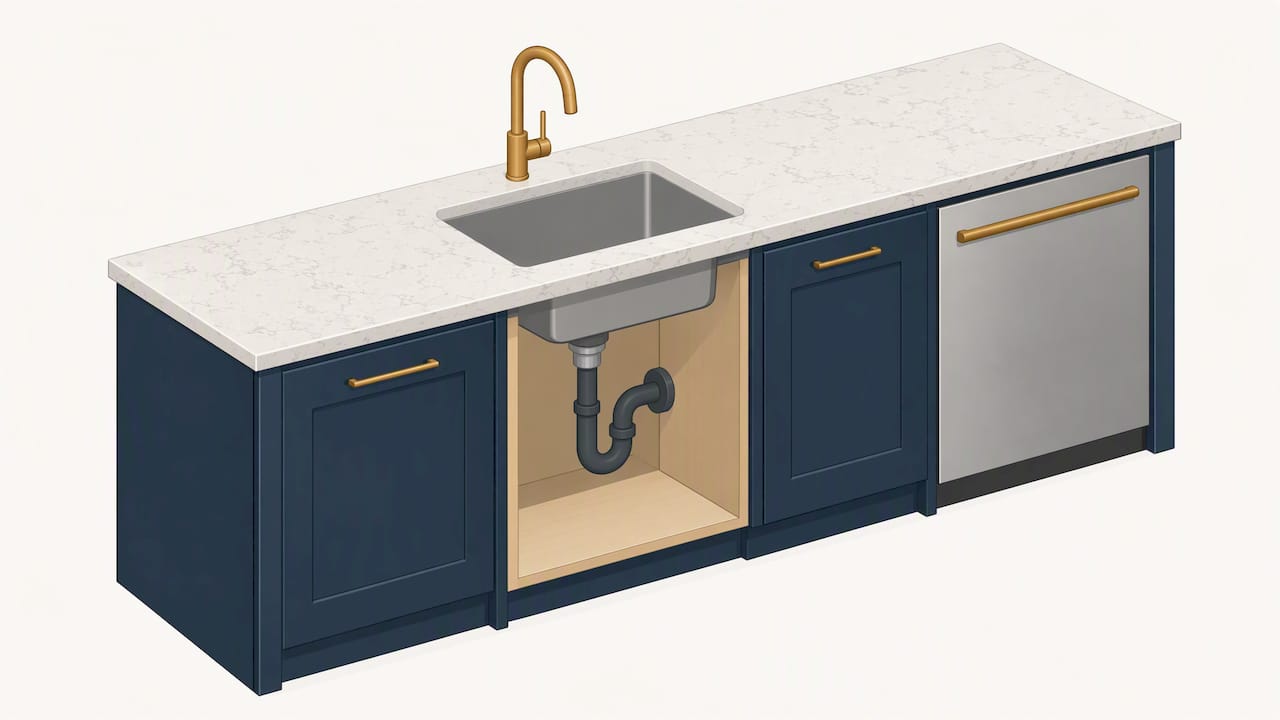
Thickness is a design decision and a structural one at the same time, and the right answer depends on how the surface actually gets used. A kitchen island that takes daily impact and carries an overhang calls for the safer default of 3cm, especially if resale value or heavy household use is part of the calculation. A vanity or backsplash with guaranteed full support is a fair place to choose 2cm for its slimmer look and lower material cost, as long as the installer accounts for that support properly.
— Vlad
FAQ
Is 2cm too thin for a countertop?
Not when it’s fully supported. 2cm quartz works well for vanities, backsplashes, and short runs on a continuous base, but horizontal kitchen spans usually need a plywood subtop to perform safely.
What is the best thickness for quartz countertops?
3cm is the established standard for kitchen counters and islands because it handles longer spans, overhangs, and sink cutouts without added support. 2cm remains the better fit for bathrooms and vertical applications.
What’s the difference between 2cm and 3cm?
2cm measures about 3/4 inch thick and 3cm measures close to 1-1/4 inches. The thicker slab is substantially stiffer, resists bending over longer spans, and skips the plywood subtop that 2cm usually needs.
What is the price difference between 2cm and 3cm quartz countertops?
Raw 3cm slabs cost 20 to 40 percent more than 2cm as material alone, but installed totals often land closer together once plywood subtops and laminated edges get added to a 2cm job. Ask for an itemized quote to compare the real installed cost.
Ready to get a thickness recommendation for your own kitchen or bathroom? Our team at Solution Team Remodeling walks through cabinet condition, support needs, and edge style before we quote a job, so the estimate you get matches what actually gets installed. Request your free estimate and we’ll help you land on the thickness that fits your space and budget.
Sources
2cm vs 3cm countertops: thickness, weight, cost and when to use each
Cambria installation requirements for Cambria countertops (2cm and 3cm)
Understanding the practical implications of slab thickness (StoneWorld)
Recommended
Back to Blog
